Introduction: If You Are Looking for a Book That Makes You Think Differently About Technology and Ethics, You Just Found It
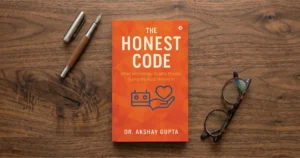
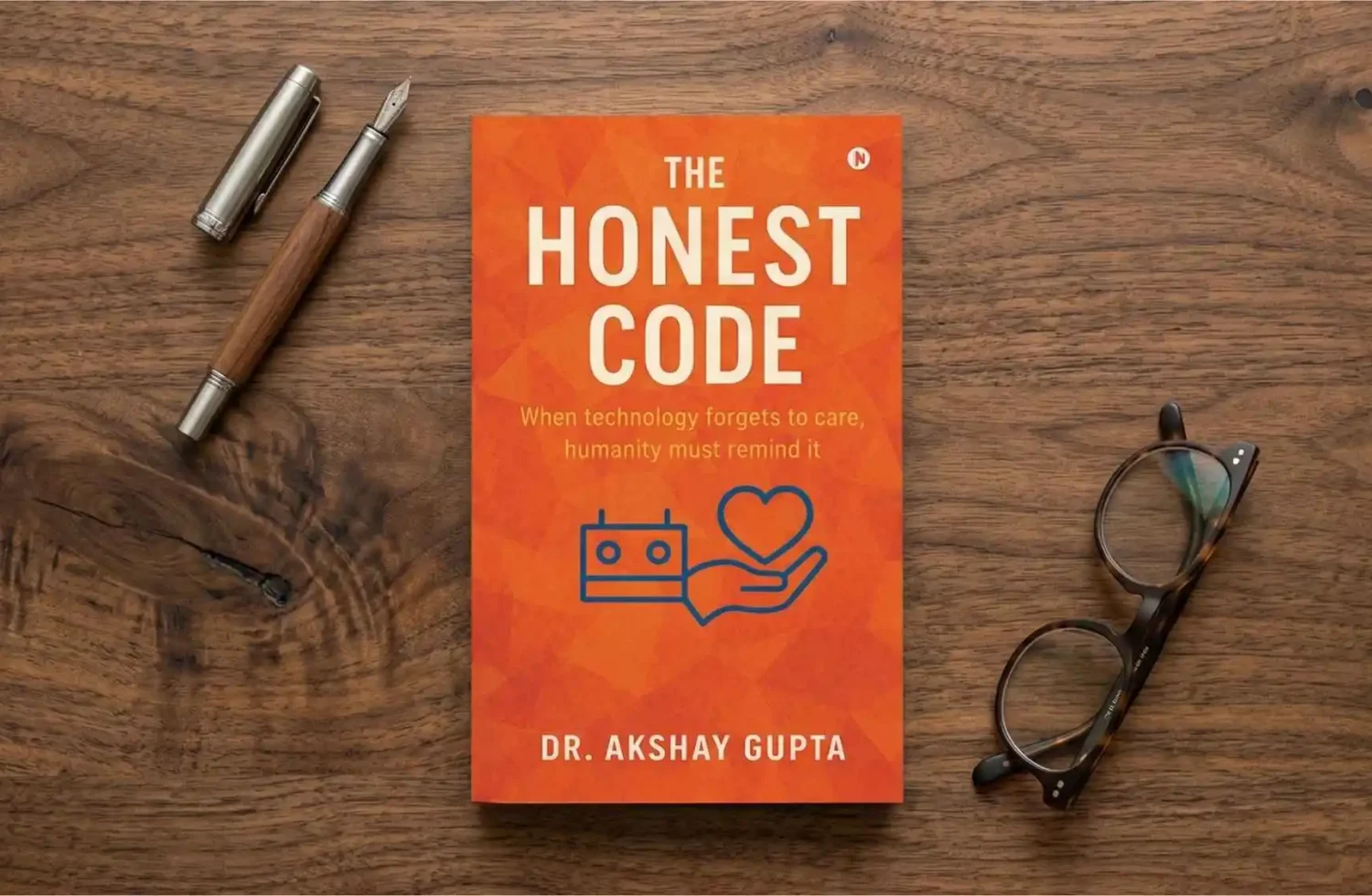
If you have arrived here searching for an honest, in depth review of The Honest Code by Dr. Akshay Gupta, you are in exactly the right place. And I want to tell you upfront: this is not a book I expected to affect me the way it did.
There are books that inform you and books that unsettle you. The best ones do both, quietly and without warning, somewhere around the third chapter when you realise you are no longer just reading about characters but recognising something uncomfortably familiar in yourself.
The Honest Code arrives dressed as a story about dentistry and technology. A free AI powered app. A father and his two daughters. A viral moment followed by investor interest and national scale. But within a few chapters it becomes something far more layered. It becomes a meditation on honesty, on the slow erosion of purpose under the weight of growth, and on the very human tendency to keep saying yes to reasonable things until we have said no to everything that mattered.
In 2026, when conversations about AI ethics, responsible technology, and the tension between purpose and profit have never been more urgent or more relevant, The Honest Code by Dr. Akshay Gupta arrives at exactly the right moment. It does not offer policy recommendations or theoretical frameworks. It offers something rarer and more lasting. It offers a story that stays with you.
This is my complete review, and I will say this clearly: it is one of the most quietly powerful books I have read in recent memory.
Quick Review Summary Box
Book: The Honest Code
Author: Dr. Akshay Gupta
Published: 2026
Genre: Literary Fiction / Technology Ethics
Overall Rating: 4.8 out of 5
Reading Time: Approximately 3 to 4 hours
Best For: Professionals in technology, healthcare, startups, and anyone curious about the ethics of AI and innovation
One Line Verdict: A quietly devastating and deeply human story about what we build, why we build it, and what it costs when we stop being honest about both.
Who Is Dr. Akshay Gupta and Why Does His Background Matter for This Book?
Understanding the author is essential to understanding why The Honest Code works as well as it does.
Dr. Akshay Gupta is a practising dentist whose professional life is built around early detection, preventive care, and the frustrating reality that most patients arrive too late. That lived experience is not the background colour in this book. It is the entire foundation.
When Dr. Gupta writes about a dentist watching preventable suffering day after day, he is writing from genuine knowledge. When he constructs a metaphor around decay spreading fastest when no one is cleaning it, he is drawing on years of clinical observation. The precision with which he describes both the dental realities and the human psychology around them gives the book a credibility and specificity that most fiction exploring technology and ethics simply does not have.
Some readers will notice that the book is seventy pages long and wonder whether that is enough. Dr. Gupta has addressed this directly, and his answer says something important about the kind of writer he is:
“Those 70 pages are not written to impress, stretch, or decorate a story. They are written to reflect exactly what I have lived, experienced, and understood. I stopped writing the moment my truth ended. Anything beyond that would have been an addition for the sake of length, and that would dilute the very essence of the book. The Honest Code is not about how much I can say, but how truthfully I can say it. I have always believed in being strong from within rather than appearing strong on the outside. This book follows the same principle. So yes, it is 70 pages. And that is exactly how long my truth is.”
That answer is not a defence of brevity. It is a statement of artistic integrity, and it reframes the question entirely. The book is not short. It is precise. There is a meaningful difference between the two, and Dr. Gupta understands it deeply.
In 2026, as healthcare technology becomes one of the most ethically scrutinised industries in the world, a book written by someone who lives inside that world rather than observing it from outside carries a different weight. Dr. Akshay Gupta is not imagining what it feels like when technology built for patient welfare gets redirected toward profit. He is writing from the vantage point of someone who would be on the receiving end of that redirection.
That is what makes The Honest Code feel less like a novel and more like a reckoning.
What Is The Honest Code Actually About? A Clear Overview Without Spoilers
The Honest Code follows Dr. Arvind Rao, a dentist in Pune who grows increasingly frustrated watching patients arrive too late for preventive care. Driven by a simple but urgent question, what if people could check their own teeth before the pain became unbearable, he collaborates with his elder daughter Mira, a software engineer, and younger daughter Tara, a designer, to build SmileScan.
SmileScan is a multilingual AI powered dental awareness app available entirely for free to anyone with a basic smartphone. It speaks eight regional Indian languages. It requires no registration, no login, and no payment. It simply tells you, calmly and honestly, what it sees when you take a photo of your teeth.
It works. It goes viral. It attracts five crore in investor funding. And then, gradually and almost imperceptibly, it begins to change.
The Honest Code is not a summary of how startups fail. It is a deeply human exploration of how purpose erodes, how intention weakens under pressure, and what it actually costs, professionally, personally, and morally, when the people who built something with love watch it learn to speak a different language.
What Makes This Book Stand Apart From Every Other Novel About Technology and Ethics?
In a crowded space of books on AI ethics and technology, most titles approach the subject from a distance. They offer frameworks, case studies, and policy recommendations. They treat ethics as a system problem rather than a human one.
Dr. Akshay Gupta does something entirely different. He makes it personal.
By grounding his story in dental health, a field most readers have an immediate and visceral relationship with, he creates a metaphor that operates simultaneously on multiple levels. The decay he describes in teeth mirrors the decay he describes in institutions, in intentions, and in the quiet compromises that accumulate inside any organisation that starts with purpose and encounters scale.
Most fiction about technology positions its critique from the outside, looking in at Silicon Valley archetypes and familiar villains. The Honest Code positions its critique from the inside, inside a family, inside a clinic, inside the daily decisions of people who genuinely wanted to do good and found the world had other ideas.
That is what makes it rare. And that is what makes it last.
The Three Big Ideas This Book Explores Better Than Almost Anything Else
The Three Big Ideas This Book Explores Better Than Almost Anything Else Does Profit Always Corrupt Purpose, or Is That Too Simple a Question?
The central tension in The Honest Code is one that anyone who has worked inside a growing organisation will recognise immediately. SmileScan begins as a free tool with no advertising, no data collection, and no commercial agenda. By the time investors hold majority control, the app has a premium tier, a partner clinic listing system that prioritises paying clinics, and an algorithm quietly tuned to exaggerate risk because fear converts better than reassurance.
What makes this exploration of honesty in technology and business so compelling is that no single person in the book is straightforwardly corrupt. Every decision has a rationale. Every compromise is framed as necessary for survival. Dr. Gupta is not interested in villains. He is interested in systems, and in how good people operating inside flawed systems can produce outcomes they would never have chosen individually.
When Does Technology Stop Serving People and Start Using Them?
One of the most important arguments the book makes, and makes quietly without ever stating it directly, is that technology is only ever as honest as the intention behind it. The AI in SmileScan does not become manipulative on its own. It is trained to be. It is optimised toward outcomes that serve revenue rather than health. And the people who did that optimising were not hackers or fraudsters. They were board members with quarterly targets.
This is perhaps the most urgent insight the book offers in 2026. As AI becomes embedded in healthcare, finance, education, and daily life, the question of who is setting the objectives and why becomes more critical than any question about the technology itself.
What Does Scaling Actually Cost the Things We Build With Love?
The third major theme is the one I found most personally resonant. Growth in The Honest Code is not presented as inherently bad. It is presented as a force that requires active ethical governance to remain aligned with original purpose. Without that governance, scale does not amplify what a product does best. It amplifies whatever produces the most measurable return.
Mira’s arc in the book is the clearest illustration of this. She builds the app out of love for her father’s vision. She scales it out of genuine ambition. And she loses it, not to a hostile takeover, but to the accumulated weight of decisions she made while telling herself the heart of it was still intact.
Is The Honest Code Well Written? An Honest Assessment of Style and Readability
Dr. Akshay Gupta writes with an unusual and deeply effective combination of clinical precision and narrative warmth. His sentences are clean and uncluttered. His pacing is deliberate without ever feeling slow. He trusts his readers to arrive at conclusions without being guided to them, which is a rare quality in fiction that carries a philosophical argument.
The book is structured in ten short chapters, each one advancing both the plot and the thematic argument simultaneously. The multilingual dimension of SmileScan, the app speaks eight regional Indian languages at launch, is handled with genuine sensitivity and adds a layer of social meaning that elevates the story beyond a simple startup narrative.
The dialogue is natural without being casual. The emotional moments land without melodrama. And the central metaphor, decay as a stand in for moral erosion, is deployed with enough restraint that it illuminates rather than overwhelms.
For readers who find most business fiction either too dry or too sentimental, The Honest Code occupies a genuinely rare middle ground.It is emotionally engaging without being manipulative, and intellectually substantial without being inaccessible.
What It Felt Like to Actually Read This Book: A Personal Reflection
I picked up The Honest Code expecting a competent story about technology and ethics. What I did not expect was to spend the final chapters thinking less about the characters and more about myself.
There is a line that appears more than once in the book, used as both a dental observation and a moral metaphor: decay spreads fastest when no one is cleaning it. I read it the first time and noted it. I read it the second time and felt it. By the time I finished the book I was applying it to things in my own life that had nothing to do with teeth.
I found myself thinking about the projects I have been part of that started with clear purpose and slowly acquired a different centre of gravity. About the meetings where I did not ask the uncomfortable question because the momentum felt too important to interrupt. About the difference between being present at the beginning of something and being honest about what it has become.
That is the mark of writing that works at the right depth. It uses a specific story to illuminate something universal, and it does so without announcing its intentions or congratulating itself for the insight.
I finished it in one long sitting and then sat quietly for a while before reaching for my phone. That, for me, is the clearest sign that a book has done something real.
Who Exactly Should Read The Honest Code in 2026?
This book is essential reading for startup founders and entrepreneurs who want to build mission driven companies and need an honest reckoning with the pressures that will test that mission.
It is equally important for product managers, engineers, and technologists working in healthcare, finance, or any field where AI is making decisions that affect real people’s lives.
Investors and business leaders will find in it a mirror that is uncomfortable but necessary, particularly around the question of what responsible stewardship of a funded company actually requires.
General readers who are curious about how the digital tools shaping their lives are built, funded, and sometimes quietly redirected will find it accessible, engaging, and genuinely illuminating.
And anyone who has ever built something they cared about, watched it change, and wondered whether they should have said something sooner will find in The Honest Code a story that feels less like fiction and more like recognition.
Key Takeaways
Before you read further, here is what this book will leave you with:
Technology does not lose its integrity on its own. People make choices that erode it, one reasonable decision at a time.
Scaling a mission driven product without active ethical governance does not amplify its purpose. It amplifies whatever produces the most measurable return.
The most dangerous compromises in business are the ones that make complete sense at the time.
Honesty is not a founding principle. It is a daily practice that requires maintenance, attention, and the courage to ask uncomfortable questions even when the metrics look good.
Purpose, once lost, can be rebuilt. But only by people willing to start again from truth rather than momentum.
Final Verdict: Is The Honest Code Worth Reading?
Yes. Without qualification.
The Honest Code by Dr. Akshay Gupta is not a comfortable book. It does not offer easy reassurance that good intentions will protect good work. It insists, gently but persistently, that protection requires attention, that purpose requires maintenance, and that the most important question any builder can ask is not whether they started with honesty but whether they are still being honest now.
In a landscape full of books that celebrate disruption and scale, this one makes a quiet and courageous argument for something less fashionable and far more necessary. It argues for integrity as a daily practice. For the courage to ask uncomfortable questions even when the metrics look good. For the understanding that what we build reflects not just our ambitions but our character.
I finished it feeling both challenged and, strangely, hopeful. Because if the diagnosis is clear, the treatment is always possible. And in Dr. Gupta’s world, it begins with a single, difficult, necessary act of honesty.
Rating: 4.8 out of 5
The Honest Code by Dr. Akshay Gupta is available on Amazon in paperback and hardcover.
Frequently Asked Questions About The Honest Code by Dr. Akshay Gupta
What is The Honest Code by Dr. Akshay Gupta about?
The Honest Code is a work of literary fiction that follows a dentist and his two daughters as they build a free AI powered dental awareness app, watch it grow into a nationally funded platform, and navigate the profound ethical consequences when commercial pressures begin to corrupt its original purpose. At its core it is a story about honesty, human intention, and the cost of compromise.
Is The Honest Code based on a true story?
The book is a work of fiction, though it draws directly on Dr. Akshay Gupta’s professional background as a practising dentist. The tensions it explores around ethics, monetisation, and accessible healthcare reflect real dynamics present in the health technology industry today.
What are the main themes of The Honest Code?
The book’s primary themes include the tension between purpose and profit, the ethics of AI in healthcare, the human cost of scaling a mission driven product, the difference between building something and protecting it, and the importance of honesty as an active daily practice rather than a passive founding value.
How does The Honest Code relate to current conversations about AI ethics?
The book is directly relevant to 2026 debates around responsible AI, particularly in healthcare. Its central argument, that AI becomes manipulative not through technical failure but through human decisions about what to optimise for, mirrors real world concerns about algorithmic accountability and the commercialisation of health technology.
Is The Honest Code suitable for readers who are not interested in technology?
Absolutely. While technology is the vehicle, the book’s real subject is human nature. Readers with no background in technology or startups will find the family dynamics, moral conflicts, and emotional journey entirely accessible and deeply resonant.
How long is The Honest Code and how long does it take to read?
The book is structured across ten chapters and can be read comfortably in three to four hours, though its ideas will stay with you considerably longer.
What makes The Honest Code different from other books about AI and ethics?
Most books on AI ethics are non-fiction and approach the subject analytically. The Honest Code uses literary fiction to explore the same territory emotionally and experientially, making its arguments more personal, more immediate, and ultimately more memorable than a policy analysis or case study could be.
Who is the target audience for The Honest Code?
The book is ideal for professionals in technology, healthcare, and business leadership, as well as general readers interested in ethics, innovation, and the human dimensions of the digital world. It is particularly resonant for anyone who has built something with genuine purpose and wondered, at some point, whether that purpose survived contact with the real world.